



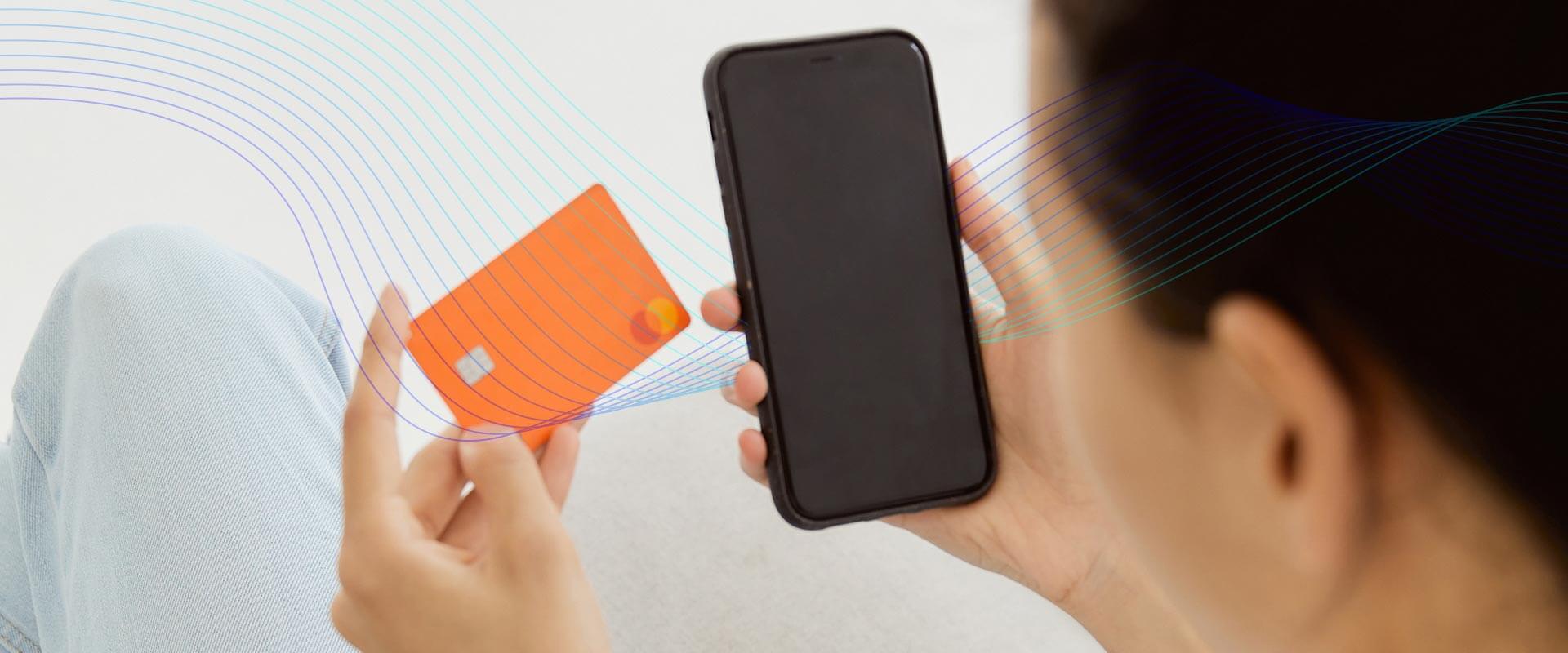

It is 9 a.m. on a Thursday in October, and the finance lead of a 480-room resort opens her payment processor dashboard before her first coffee. Eighteen new disputes this month. One catches her eye: a dinner on October 8 at the main restaurant, $312, signed “John Smith, room 412.” The cardholder called the bank f48 hours ago. He says he was not at the hotel that day.
The curious part of the case is that John Smith was at your hotel. The person who signed the check, also. The dinner happened. It was served and consumed. And yet, in sixty days, the bank is going to side with the cardholder.
Welcome to the operational reality of hotel chargebacks. The place where what happened matters less than what you can prove.
The Blind Credit of the Room Charge
You probably have never called it that. Most operators don’t. You call it a room charge, a checkout settlement, a convenience for the guest. Fair. But what your hotel does every time a server writes a room number on a folio without verifying who is consuming is, technically, extending blind credit to a debtor the bank does not recognize.
The restaurant inside your resort does not operate like a restaurant on the street. On the street, the diner pays with their card. The card authenticates with PIN or tap. The bank approves the transaction in real time. The identity of the payer is verified before the ticket closes. There is a chain of evidence any bank understands.
Inside your hotel, the guest signs a piece of paper. The folio says “room 412.” The signature is a stroke nobody compares to anything. The charge appears on the guest’s bill at checkout, three days later. And if everything goes well, it settles against a card pre-authorized at check-in, a card the server never saw at the restaurant.
That chain, looked at by a bank, is not a chain. It is a sequence of acts of faith.
Why Your Hotel Plays in the Worst League of Card Disputes
The average chargeback rate across industries sits around 0.5%. In travel and hospitality it climbs to 1.93% (Chargebacks911, 2025). Nearly four times. But the figure that really paints the picture is not that one. It is this one: Visa estimates up to 75% of all chargebacks are instances of dispute abuse, not criminal fraud (Visa, cited by Chargebacks911 2025). In hospitality specifically, friendly fraud accounts for 71% of chargebacks coded as fraudulent (Prostay, 2025).
Translation: three out of every four disputes you receive are not the work of criminals. They are the work of your own guests. People who stayed at your hotel, consumed services, signed the folio and, weeks later, did not remember the charge, did not recognize the descriptor on their statement, or had an argument with their partner over the minibar bill. The bank calls. The dispute lands. And your work begins.
The American Hotel and Lodging Association puts the US lodging sector at as much as 55% of all card fraud in the country, without even counting that friendly fraud (AHLA, cited via CoStar 2019). When the industry says “fraud” in hospitality, the category has grown so broad it has stopped meaning anything useful.
The Association of Certified Fraud Examiners estimated that the lodging industry loses between 5% and 6% of its revenue every year to fraud. For a $3 trillion global industry, that is $150 billion that never reaches the P&L (ACFE 2022, cited by Chargebacks911 and Prommt).
Your hotel is not responsible for the full $150 billion. Its slice, though, is not negligible.
The Invisible Numbers: What Each Dispute Costs Before You Fight It
The average hotel chargeback value sits around $200, against $120 across the wider travel industry (Prostay, 2025). But that is the visible loss. The total cost per dispute, once you add the bank fee, staff time spent rebuilding the case, dispute management software, administrative overhead and the risk of showing up in Visa’s and Mastercard’s monitoring programs, lands between $190 and $200 per incident. Above the disputed amount. Each dispute costs more to resolve than to lose.
And even when you do all the work right, merchants win between 20% and 30% of the disputes that go to representment (Chargebacks911, 2026). If your hotel does not have credentialed evidence linking the cardholder to the specific transaction, the structural odds drop toward the 20% end.
For every $100 your finance team chases in disputes, you recover $20 to $30. The rest is the cost of running a payments infrastructure that trusts a server’s handwriting.
The VAMP Clock: What Changes on April 1, 2026
Up to here, the problem is operational. From April 1, 2026, it becomes regulatory.
In 2025 Visa launched the Acquirer Monitoring Program (VAMP), which replaces the older VDMP and VFMP programs. The merchant excessive threshold sat at 2.2%. On April 1, 2026, it drops to 1.5% in the United States, Canada and the European Union (Visa Corporate, 2025). Mastercard’s Excessive Chargeback Program already kicks in at 1.5% (Visa/Mastercard Risk Program Thresholds, Moneris 2025).
A property hovering near 1.5% today is technically fine. The same property next quarter will be flagged. At that point, the cost stops being the individual dispute. It becomes the merchant account itself: higher reserves, higher processing fees, and the real possibility that the processor invites you to find another payments provider.
For a GM or a hotel CFO, that scenario reads three ways. Financially, first. Operationally, second: your commercial team spent years negotiating the terms of the current payments contract. Reputationally, third: leaving a relationship with a top processor makes it harder to enter the next one.
The clock is ticking. The industry reacts late to this kind of event for one reason: chargebacks look like an individual-dispute problem. They are not. They are an architecture problem. And architecture gets changed months in advance or it does not get changed.
The Frame Shift: From Room Charge to Identified Charge
Here is the turn most operators do not make when they assess the situation.
Chargebacks do not go down with more procedures. They do not go down with more staff training. They do not go down with more detailed folios or with thirteen-month document retention. Those are response measures. They work when the problem is occasional. In hospitality the problem is structural, and the only way to reverse it is to attack the source.
The source is not the stolen card behind criminal fraud. The source is the operational inability to prove who consumed what at each of the hundreds of points of sale across your resort. The lobby barman, the server at the Asian restaurant, the spa attendant, the pool kid keying orders into a PDA. Each of them generates, in good faith and by habit, charges the bank will not defend because they were not signed by a verified credential.
What changes with an NFC wristband infrastructure linked to the guest’s PMS profile is exactly that. The guest taps. The system confirms identity in milliseconds. The charge posts with timestamp, location and unique credential ID. The chain of evidence generates itself. When the dispute lands sixty days later, there is nothing to rebuild. You retrieve the record and submit it.
That is the difference between running blind credit and running identified collection. It is not a marginal improvement on a dispute procedure. It is a change in the nature of how you get paid.
What Stopped Happening at Krystal Cancún
Krystal Cancún is a 502-room oceanfront property in Cancún’s hotel zone. All-inclusive model, nine F&B outlets, a guest population that mixes resident guests with external visitors from Grupo Hotelero Santa Fe properties. Before Goguest deployed in June 2023, the operational complaints had the three usual names: wristband fraud, contested room charges, friction at every point of sale that mixed guests and non-guests.
After deployment, the wristband inventory became real-time and fully traceable. Every transaction went through credential reads on an Android device that verified identity and plan type before closing the charge. Room key generation was unified into a single step that activated the NFC credential at the same time.
In the first six months of live operation, room service orders rose 59%. Activity bookings, 227%. Pool towel loans, 514%.
Those numbers are the part marketing tells. The part marketing does not tell is the other one: the operational noise from fraudulent chargebacks, contested charges and friction at mixed points of sale simply stopped happening. It did not go down. It disappeared.
You can read the Krystal Cancún case study in full here, and a tactical view of the same problem from the pool bar in Why Your Pool Bar Is the Single Worst Place in Your Resort to Take a Credit Card. If you want to see the product piece that closes this problem, it is on the cashless payments page.
The Real Question for Your Property
You are not choosing between payment methods. You are choosing between two economic models.
The first runs every charge against a verified credential. The chain of evidence builds in real time. Legitimate disputes settle. Illegitimate ones get rejected with proof. And your hotel’s chargeback ratio stays below the VAMP threshold without your finance team having to assign an FTE to it.
The second model is the one you have today. Signed folios, checkout settlement, room numbers written down. Three quarters of the disputes labeled fraud are not fraud, but you lose them anyway. Each dispute costs more to resolve than to lose. The VAMP clock is running. And the processor is starting to read your ratio.
A chargeback is not a financial loss. It is the invoice the bank sends you for collecting without knowing who paid.
If you want to see where that invoice lives in your property (what percentage of your charge volume runs on blind credit today, what the VAMP scenario costs you starting in April, what an NFC and WebApp deployment would change in your dispute ratios and ancillary revenue capture), book 15 minutes with our team.
Book your 15-minute diagnostic session →
Sources
- Visa Corporate, Visa Acquirer Monitoring Program Fact Sheet, 2025.
- Chargebacks911 and Prommt, partnership announcement and industry data on hospitality chargeback rates and friendly fraud, 2025.
- Chargebacks911, Maximize Your Chargeback Win Rate and Hotel Chargebacks: Causes, Rules and How to Win Disputes, 2024-2026.
- Prostay, Hotel Chargeback: Causes and Best Practices, 2025.
- Association of Certified Fraud Examiners (ACFE), 2022 estimate of revenue loss to fraud in hospitality, cited by Chargebacks911 and Prommt.
- American Hotel and Lodging Association, US card fraud share data, cited via CoStar, 2019.
- Visa/Mastercard Risk Program Thresholds, Moneris compendium, March 2025.
- Goguest, Krystal Cancún Case Study, 2024.